Grammar can be a very difficult topic to learn and teach.
While we are all expected to use commas, periods, colons, and Em-dashes correctly from the day we learn to write sentences, we are rarely taught the specific rules (and why they exist).
This is in large part be cause the rules of grammar reference a wide array of confusing concepts: dependent clauses, independent clauses, subjects, verbs, lists, etc.
It’s too much to take in as a child, and it often feels too late as an adult.
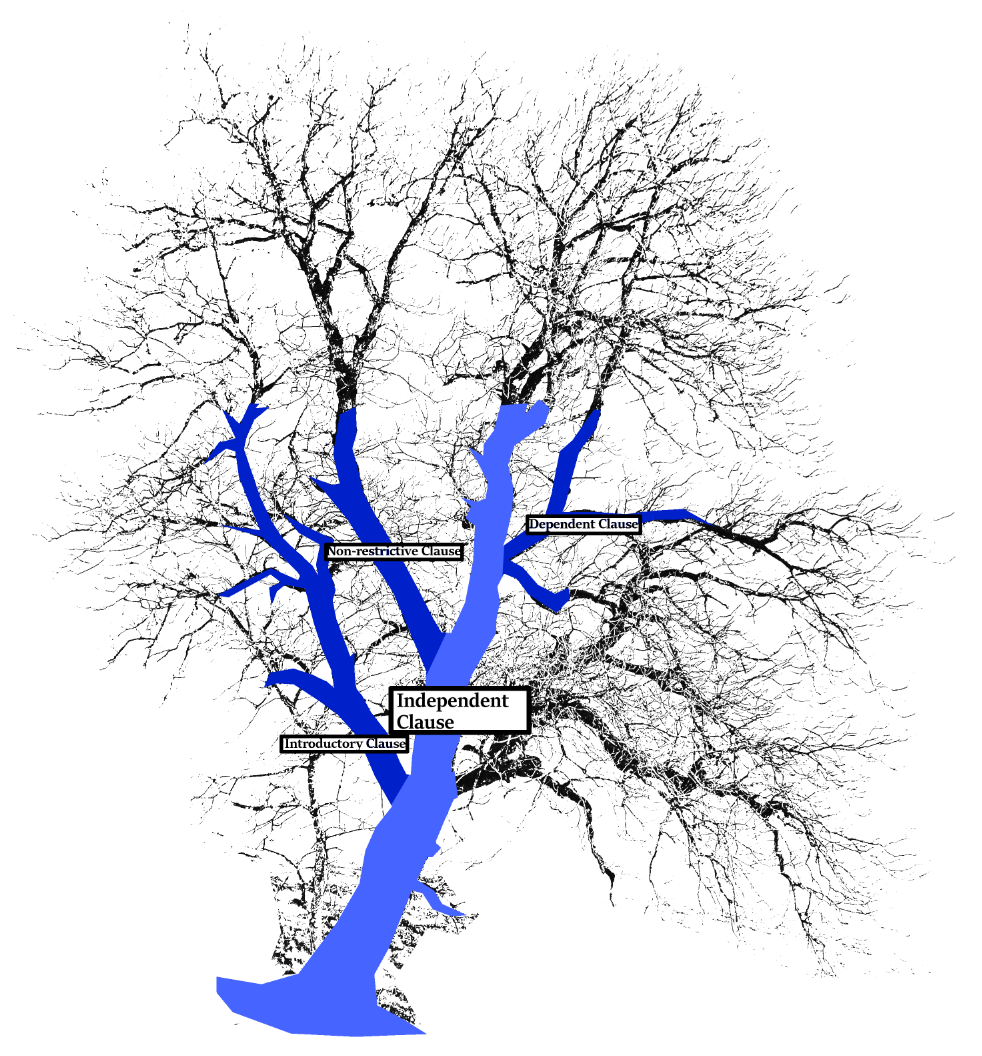
Well, I have good news. In this series, I’m going to explain grammar (and general sentence structure) to you from the ground up using a simple analogy: The tree and its branches.
What is Grammar?
As writers, we use grammar as a polishing tool. It’s used to help convey your intent more clearly.
Famously, we have the written example “Let’s eat Grandma” which could mean one of two things:
- “Let us eat our grandmother.”
- “Grandmother, come eat with us!”
To make it clear what we mean, we add a comma to the second, and keep the first as is.
- “Let us eat our grandmother.” –> “Let’s eat Grandma.”
- “Grandmother, come eat with us!” –> “Let’s eat, Grandma.”
Grammar is ultimately a set of conventions—rules that are agreed upon that help convey intent: Are we suggesting we eat our grandmother; or are we inviting her to dinner? Grammar and punctuation help make these intents clear.
Fundamental—Simple Sentences
All English writing begins with simple sentences. These are basic thoughts that must include a subject and a verb.
- Subject-is a noun (person, place or thing) that the sentence is about.
- Verb-is the main action being taken.
We end sentences with a hard stop. Typically a period (.), question mark (?), or exclamation mark (!).
Simplest of Sentences—Sentence Core
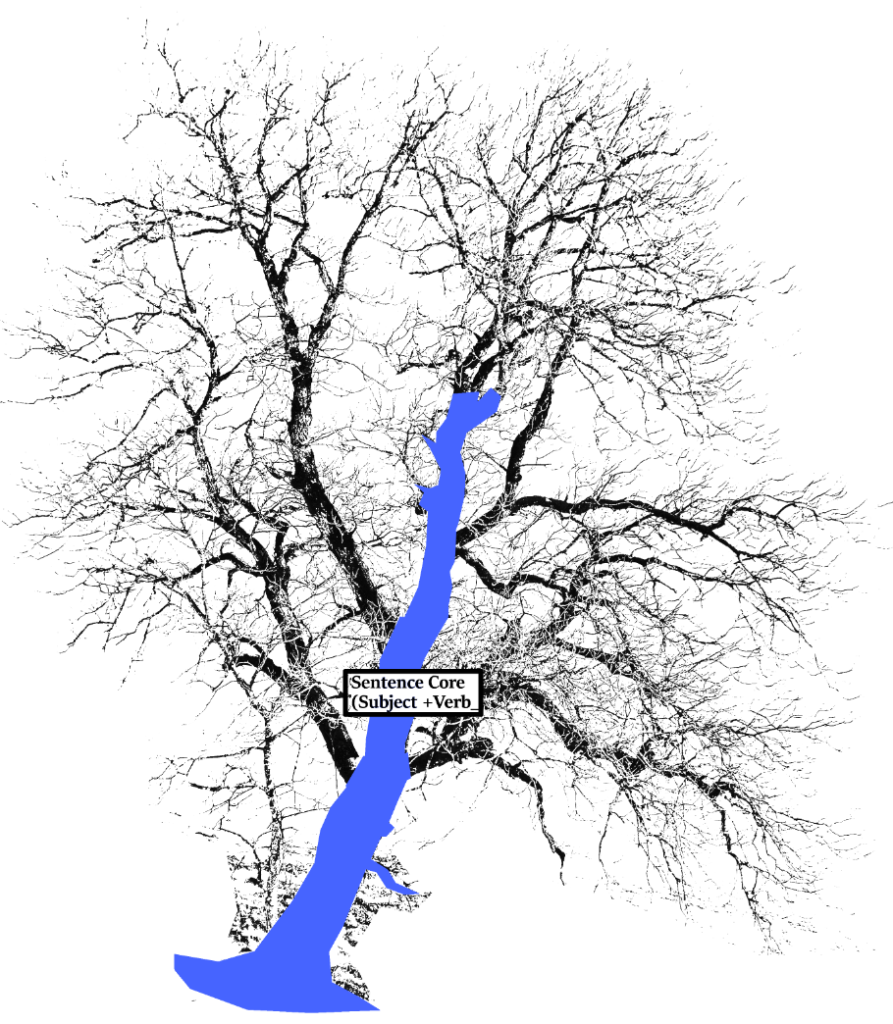
If you look at any proper sentence, you will find a subject and it’s accompanying verb. The most basic of proper sentences will simply be made up of this sentence core. I’ve added some examples below:
| Sentence | Subject (person place or thing) | Verb (action) |
|---|---|---|
| “Joe jumps.” | Joe | jumps |
| “London is.” | London | is |
| “Harry falls.” | Harry | Falls |
| “Flowers Bloom” | Flowers | Bloom |
This Subject+Verb makes up our “sentence core.” As long as you have them, you have the building blocks of a sentence. However, if we only use these two elements, we end up with really boring writing. So, we add description and complexity to the sentence core with Direct Objects, Adjectives, and Adverbs.
Adjectives: Details about Nouns
Adjectives are words that describe nouns (person, places, and things.) Since Subjects happen to be nouns (the most important noun in a sentence), adjectives can be used to describe subjects as well.
| Sentence | Subject (person place or thing) | Adjective (Descriptor) |
|---|---|---|
| “Good Joe jumps.” | Joe | good |
| “West London is.” | London | west |
| “Scary Harry falls.” | Harry | scary |
| “Beautiful Flowers Bloom” | Flowers | Beautiful |
As you can see, adjectives give us some more information about the subject. They can be used on other nouns as well, but we will get to that later.
Adjectives can include colors, numbers, descriptions of intent, pointing (this, that, these) and more
Adverbs: Details about Actions
While adjectives are used to describe nouns, Adverbs are used to describe verbs.
| Sentence | Action | Adverb (descriptor) |
|---|---|---|
| “Joe jumps well.” | Jumps | well |
| “London grows louder.” | grows | louder |
| “Harry falls hard.” | falls | hard |
| “Flowers bloom beautifully” | bloom | beautifully |
Adverbs tell us more about how an action is performed. It is often placed after the action word.
Direct Object—Target of the action
“Direct objects” describe what an action is acting upon. Direct objects are not necessary in every sentence, but they make thoughts more clear in many.
| Sentence | Verb (action) | Direct Object (target) |
|---|---|---|
| “Joe jumps over the dog.” | jumps over who? | dog |
| “Sophie builds Sam a fort.” | builds what? | fort |
| “Harry eats hamburger.” | eats what? | hamburger |
You can find the direct object by asking “what/who” to the verb. For example, Sophie is not building Sam, she is building a fort. We won’t get into it for now, but “Sam” is actually an “indirect object.”
At this point, we have been writing clear descriptive sentences without using any punctuation besides periods. We really start caring about punctuation when we introduce complex sentences.
Complex Sentences—Where punctuation is introduced
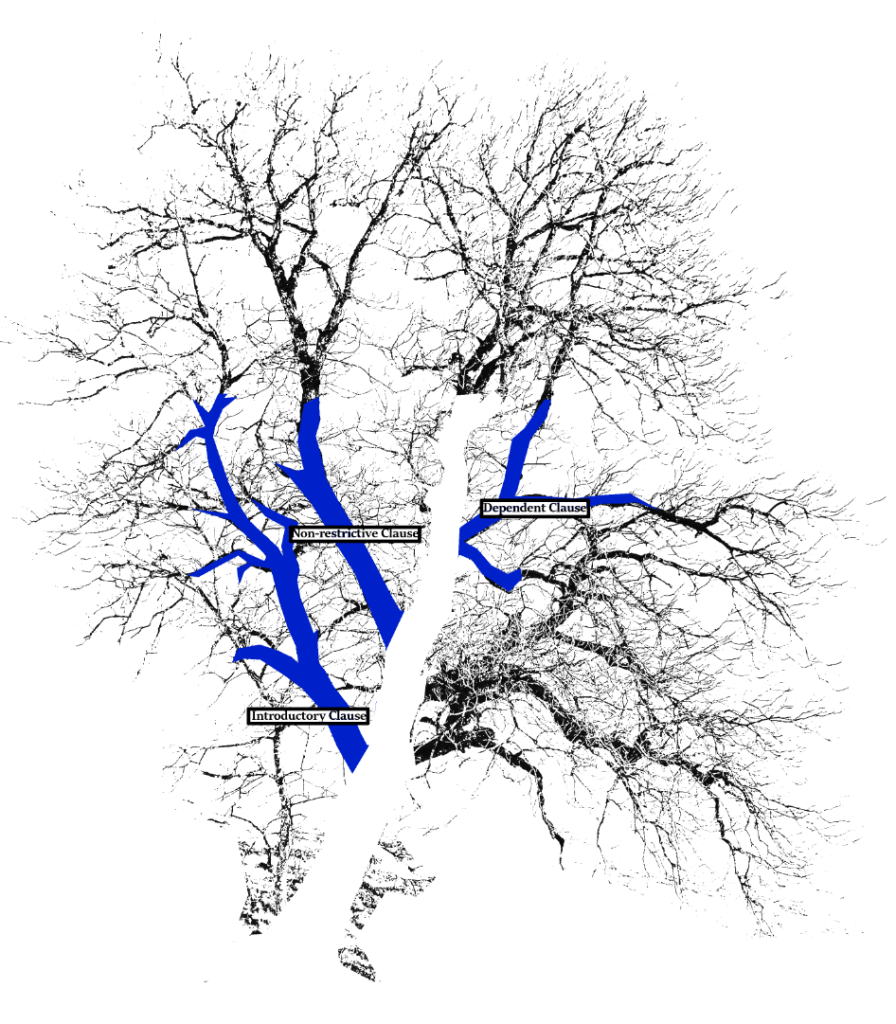
Just like how we want to add more description to our sentences with adjectives, adverbs, and direct objects, we also want to add more detail to our sentences. We do this by adding “branches” to our sentence core—We call these “branches” dependent clauses.
Now, our language will change a bit. The simple sentences we were talking about before are now going to be referred to as “Independent Clauses” to differentiate them from “Dependent Clauses.”
Dependent Clauses—Incomplete sentences
Dependent clauses are partial sentences. They will lack a subject or verb (or both), and be incomplete as a sentence on their own.
Here are a few examples:
| Dependent Clause | Noun/Subject? | Action/Verb? | Sentence? |
|---|---|---|---|
| “In the morning” | No | No | No |
| “Who was very hungry” | No | Yes | No |
| “which was a mile from his home” | No | Yes | No |
| “like Aaron” | Yes | No | No |
However, they can be attached to an independent clause (aka simple sentence) to be complete. Their completeness depends on being attached to an independent clause–hence their name.
Attaching Dependent Clauses to Independent Clauses
Let’s say we start with the independent clause (simple sentence) “Dougie walked to the mall.” We can add more detail to the thought by adding details:
| Question | Answer/Detail |
| When: When did Dougie walk to the mall? | In the morning |
| Detail: How was Dougie feeling? | very hungry |
| Where: Where was the mall? | a mile from his home |
We can add these details before, in the middle, or after our independent clause (aka simple sentence).
| Independent Clause | Dependent Clause | Full Sentence |
| “Dougie walked to the mall.” | “Dougie walked to the mall” | |
| “Dougie walked to the mall.” | “In the morning” | Dependent Clause before Independent Clause “In the morning, Dougie walked to the mall.” The dependent clause at the start is sometimes called an “introductory phrase“ |
| “Dougie walked to the mall.” | “who was very hungry” When placed in the middle of the independent clause this is also called a “non-restrictive clause” | Dependent Clause in the center of an Independent Clause “Dougie, who was very hungry, walked to the mall.” Notice this incorrect usage:”Dougie walked to the mall, who was very hungry” This sentence means the mall was very hungry. |
| “Dougie walked to the mall.” | “which was a mile from his home” | Independent Clause + Dependent Clause (at the end) “Dougie walked to the mall, which was a mile from his home.” |
| “Dougie walked to the mall.” | “which was a mile from his home””who was very hungry””In the morning” | All 3 dependent clauses attached to one independent clause “In the morning, Dougie, who was very hungry, walked to the mall, which was a mile from his home.” |
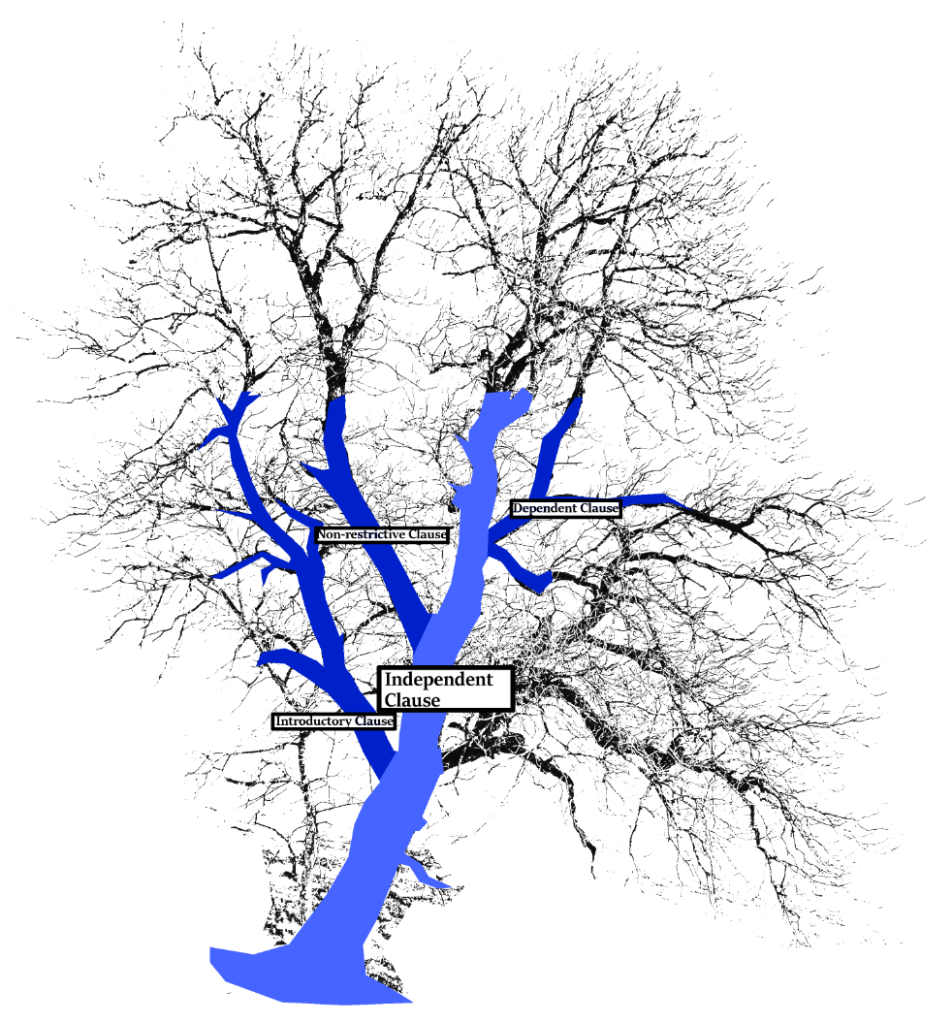
We use punctuation—such as commas, colons, semi-colons, and em-dashes—like glue to connect dependent and independent clauses together.
In the next section, we will go into depth about those rules.
Leave a Reply