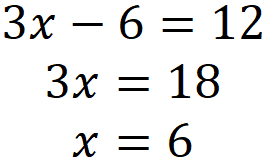
Until now, your math class has been working with numbers. These numbers have taken many different forms:
- Whole numbers: 1, 2, 3
- Negative Integers: -1, -4, -5, -6
- Fraction: 3/4, 8/9
- Decimals: 4.08, 7.6, 3.14159
- Percentages: 43%, 68%
In math, we call these numbers “constants.”
Algebra introduces a new concept called “variables” that we use letters and names to represent: x, y, z, a, b, c, k, etc). These variables are tools that make solving complicated math problems easier.
What are Variables?
Basically, we use variables to represent things that we don’t know. With that, we can create equations that help us talk about things in mathematical language. Let me give an example:
| Let’s say we bought a pack of Oreo cookies–a family pack–to enjoy over the course of a week. However, before we can get to it, our brother Tom gets into it and consumes a number of the cookies. We want to know how many cookies he ate. We weren’t around to watch him eat the cookies, so don’t immediately know how many cookies he ate. In this case, we assign a variable for that unknown: x= “Number of cookies Tom ate.” Luckily, we happen to know a family pack of Oreos has 48 cookies, and were able to count 13 cookies remaining. Since Tom was presumably the only one to eat the cookies, we have a nice equation: “Number of cookies Tom ate” + “Number of cookies left”= “Cookies originally in the pack” x+13=48 From here, we can work backward. Some number (x) plus 13 results in 48. We can find that number by working backward from 48. x=48-13=35 x=35 Tom ate 35 cookies. Tom owes us almost a whole normal pack of Oreos… |
The key to using Algebra effectively is creating mathematical equations using variables, and solving backward.
You’ve secretly been using variables
If you think about it, you’ve actually been using variables in arithmetic. But back then we used to use a (blank) to represent the unknown.
| For example: Arithmetic: 4+5= _(blank)_ 9 Algebra: 4+5=x x=9 |
In this case, we might say that either 4+5=9, or 9=x.
We use variables because they give us more flexibility and help us talk about more complicated problems.
- Arithmetic: 4* _(blank)_+4= 16
- Algebra: 4x+4=16
Later on, we end up working with more than one unknown number. With Algebra, we assign these unknowns to different variables. Unfortunately our _(blanks)_ don’t offer us the same flexibility and can cause confusion.
| Jack and Jill ate a pack of Oreos (48 cookies). We don’t know how many each ate, but we know that Jack ate twice as many as Jill. x= Number of cookies that Jack ate. y= Number of cookies that Jill ate. 48= total number of cookies in the pack We might be able to guess our way to the solution with numbers, but it can be solved more consistently with algebra. Because Jack ate twice as many cookies as Jill, we know that x=2 times y. x=2y We know that x+y=48 because they at the whole pack. x+y=48 We can replace x with 2y, because they are the same amount: 2y + y = 48. We combine the bundles (Think “I have 2 bananas, and I add a banana. Now I have 3 bananas) 3y=48 This basically says jill’s number times 3 is 48. We work backward and divide 48 by 3. y=48/3 y=16 cookies. Jill ate 16 cookies of the cookies. Based on everything we discussed before, we know that Jack ate the rest, so Jack ate 32 cookies. (This is how we solved it. x+16=48 x=48-16 x=32 Jack ate 32 cookies. |
If you’re new to Algebra, you may not have followed all of that. Just know that some problems are more difficult to solve without the tools that Algebra provides us.
In the following sections we will discuss how to solve algebra questions in more detail.
Leave a Reply