The Metis Archive is named in reference to the Greek word “μήτις” (roughly pronounced “May-tis“) meaning wisdom, skill, and craft. The term is also in reference to the mythological greek goddess, Metis, the goddess of wisdom who lives in Zeus’ head and provides him advice and counsel.
Essentially, the “Metis Archive” is a place where I store important thoughts, so “Metis” can refer back to them.
That answers the question. Though, if you’re interested in learning more, I’ve added some details.
Who is Metis?
Let’s take a minute to learn some Greek mythology.
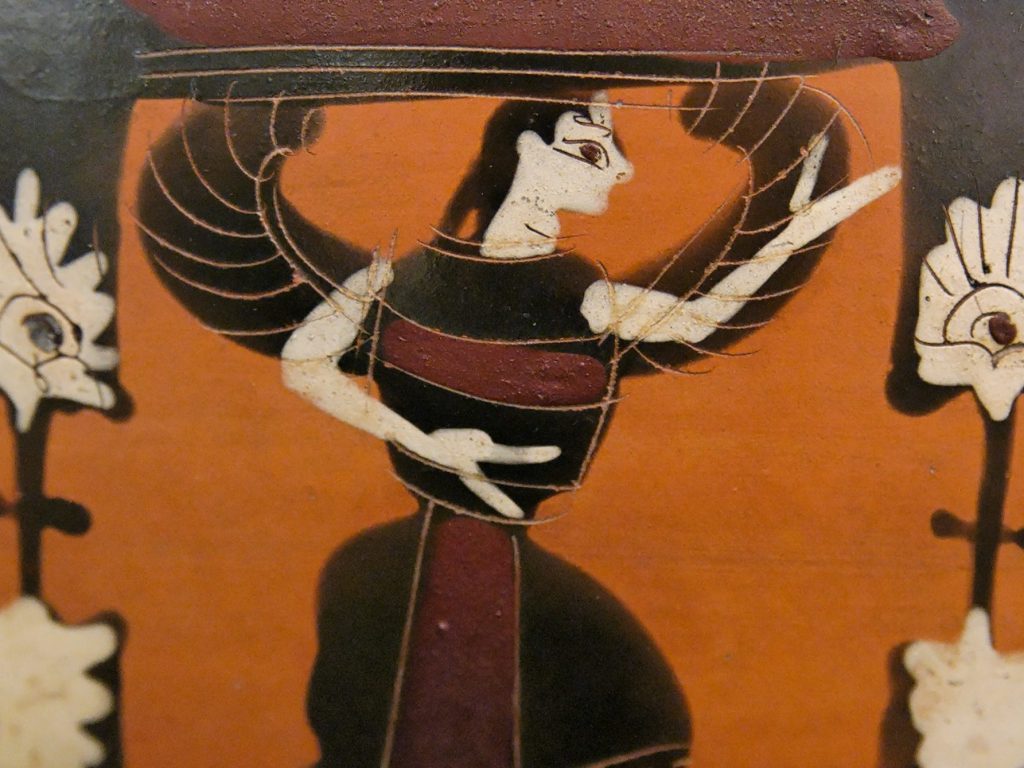
Metis is perhaps most famous for being the mother of Athena, the successor Goddess of wisdom. Though a Greek goddess, Metis is lesser known because she was not an Olympian (It’s the Olympian gods that are active in epics like the Iliad and the Odyssey). Metis was an Oceanid, a cousin to Zeus, and helped Zeus take power and establish Olympus before later becoming his first wife. Most of the references to Metis shows up in the Theogony, an ancient poem by Hesiod which chronicles the origins of the gods.
In the Theogony, Zeus marries Metis, but tries to get rid of her almost immediately:
“[885] Now Zeus, king of the gods, made Metis his wife first, and she was wisest among gods and mortal men. But when she was about to bring forth the goddess bright-eyed Athena, Zeus craftily deceived her [890] with cunning words and put her in his own belly, as Earth and starry Heaven advised.”
Source: From the Theogony
Metis became Zeus’ first wife, but also one of his victims. For context, A major theme of the Theogony is about sons usurping their fathers. Uranus the titan was usurped by his son Cronos, and Cronos himself was usurped by his son Zeus. Of course, this also would apply to Zeus—his son would usurp him as well.
“For they advised him so, to the end that no other should hold royal sway over the eternal gods in place of Zeus; for very wise children were destined to be born of her, [895] first the maiden bright-eyed Tritogeneia, equal to her father in strength and in wise understanding; but afterwards she was to bear a son of overbearing spirit king of gods and men. But Zeus put her into his own belly first, [900] that the goddess might devise for him both good and evil.”
Source: From the Theogony
To prevent that from happening, Zeus tricked Metis and ate her. The gods have a history of eating each other to get rid of them. Zeus’ father Cronos actually ate many of his children to try and prevent his own usurping. In the previous cycle, Metis was the one who supplied a potion that caused Cronos to vomit out the children he swallowed.
[1.2.1] But when Zeus was full-grown, he took Metis, daughter of Ocean, to help him, and she gave Cronus a drug to swallow,12 which forced him to disgorge first the stone and then the children whom he had swallowed, and with their aid Zeus waged the war against Cronus and the Titans.
Source: From Apollodorus, The Library

The Gods appear to be more robust than humans though, as being swallowed wasn’t the end of Metis. She survived, made her way to Zeus’ head and gave birth to Athena (also known as Tritogeneia).
“But Zeus lay with the fair-cheeked daughter of Ocean and Tethys apart from Hera … deceiving Metis although she was full wise. But he seized her with his hands and put her in his belly, for fear that she might bring forth something stronger than his thunderbolt: therefore did Zeus, who sits on high and dwells in the aether, swallow her down suddenly. But she straightway conceived Pallas Athena: and the father of men and gods gave her birth by way of his head on the banks of the river Trito. And she remained hidden beneath the inward parts of Zeus, even Metis, Athena’s mother, worker of righteousness, who was wiser than gods and mortal men.”
Eventually, Metis worked in Zeus’ head to procure weapons of war for Athena, who caused enough of a headache that Zeus ended up “birthing” her out of his head.
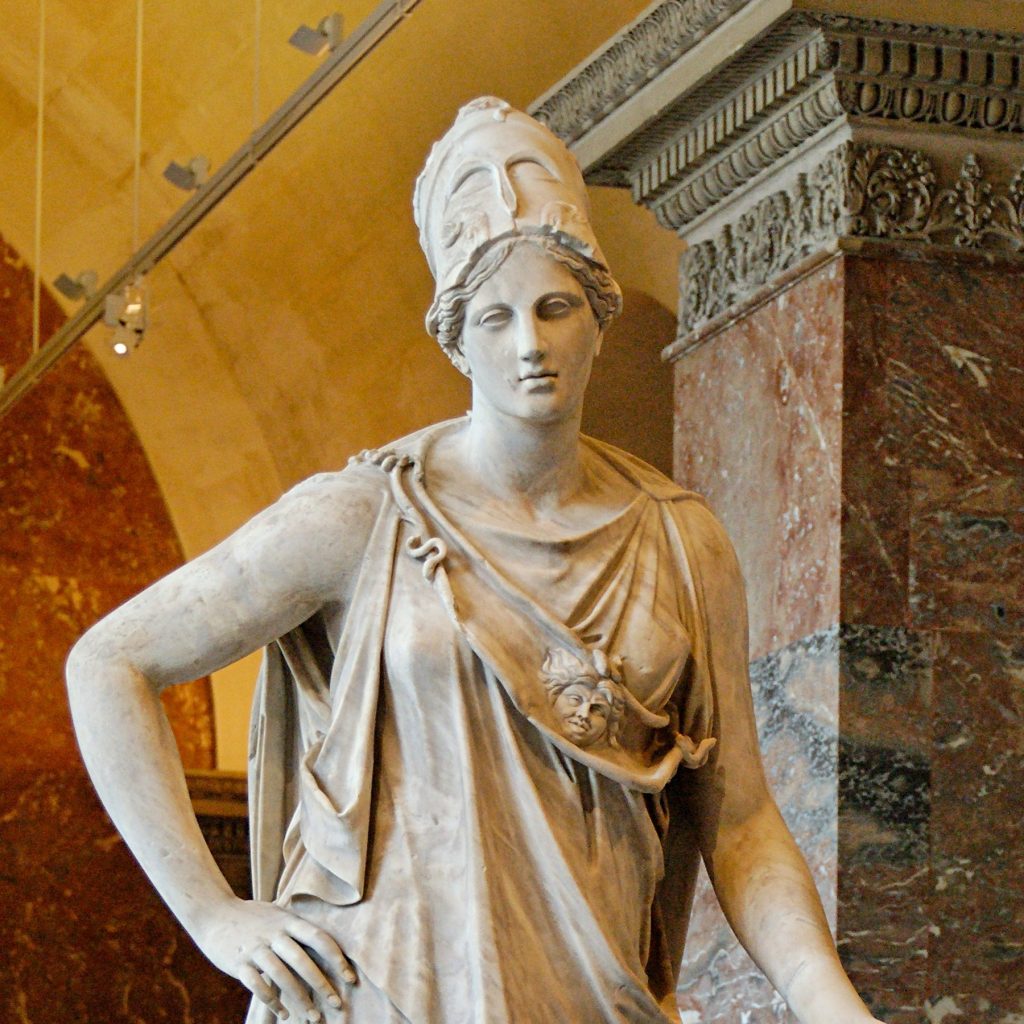
But Zeus himself gave birth from his own head to bright-eyed Tritogeneia, [925] the awful, the strife-stirring, the host-leader, the unwearying, the queen, who delights in tumults and wars and battles.
“There the goddess Athena received that whereby she excelled in strength all the deathless less ones who dwell in Olympus, she who made the host-scaring weapon of Athena. [929t] And with it (Zeus) gave her birth, arrayed in arms of war. [930]”
Source: From the Theogony
Evidently, Metis remained in Zeus’ head after Athena’s birth. As far as mythology goes, she didn’t birth the second child—a son who would be more powerful than Zeus’ thunderbolt—a usurper.
Thoughts on Metis
The mythological Greek Gods have always been portrayed as deeply human—with their flaws pronounced and central to their nature. This is part of the reason why audiences are so drawn to them.
They were also used as a way to explain natural phenomena: lightning was the doing of Zeus as he threw thunderbolts to the earth; winter was a result of Demeter’s depression as her daughter Persephone returned to Hades. Metis, as it seems to me, represents that voice in our head—perhaps a conscience, or the imaginary audience we have when we talk to ourselves. In that sense, Metis would exist in Zeus’ head as much as our own.
That being said, there are some interesting elements of Metis’ story.
Wisdom in falling for a trap
I find it interesting that Metis—the goddess of wisdom, deep thought, and deep cunning—fell for Zeus’ trap and ended up swallowed. This is would be especially odd when you consider that she played a role in the previous coup: Overthrowing Cronos. So, why, with all of her wisdom and cunning, did she allow Zeus’ to trick her and swallow her?
I can see a few explanations for this:
- It’s commentary on the nature of wisdom and fallibility.
- Wisdom looks for the long-term
Commentary on Wisdom and Fallibility
Perhaps we can interpret Metis’ predicament as a commentary on fallibility. In spite of our wisdom and insight we are not infallible. Wisdom, planning, and foresight can help us do great things and protect ourselves, but there are still things that can pass through our view. We can still be tricked, and things can happen to us. In spite of all that, Metis makes the best of her predicament. She manages to birth Athena, raise her, prepare her, and allow her daughter to return to the outside world.
It is wise to have the grace to accept that we are fallible: we make mistakes, and must forgive ourselves for making mistakes. Everyone, even the goddess of wisdom herself, can make mistakes.
Looking for the Long-Term
On the other hand, perhaps Metis did see Zeus’ ploy ahead of time, and decided that falling for the trap would be the best course of action. From there, she was able to raise Pallas Athena and prepare her for the world. When Athena left, Metis stayed behind. There is nothing in the poems that suggest that Metis could not have left—in fact, poems suggest Athena simply leaves through an axe wound Hephaestus inflicts on Zeus’ head. Metis could presumably have left the same way.
“When it came time for the birth [of Athene], Prometheus (or Hephaistos, according to some) by the river Triton struck the head of Zeus with an axe, and from his crown Athene sprang up, clad in her armour.”Source: Pseudo-Apollodorus, Bibliotheca 1. 20 (trans. Aldrich) (Greek mythographer C2nd A.D.)
So why did she stay?
Perhaps she believed that the best course of action was to guide Zeus, ruler of Olympus, to do the right thing. As a voice in his head, Metis could have deep influence on Zeus and steer him away from wrong and toward right. Perhaps, this is the bigger picture—the best thing for the world is for Metis to be in that position.
In my eyes, there isn’t a definitive correct interpretation, and nor is a “correct interpretation” valuable. What is important is the process of thinking, and the wisdom that emerges from it. I believe we should have the grace to accept our fallibility, as that acceptance allows us to continue moving forward. I believe we should also recognize that accomplishing big picture may require us to accept things that we dislike. Again, allowing us to continue moving forward.
Leave a Reply