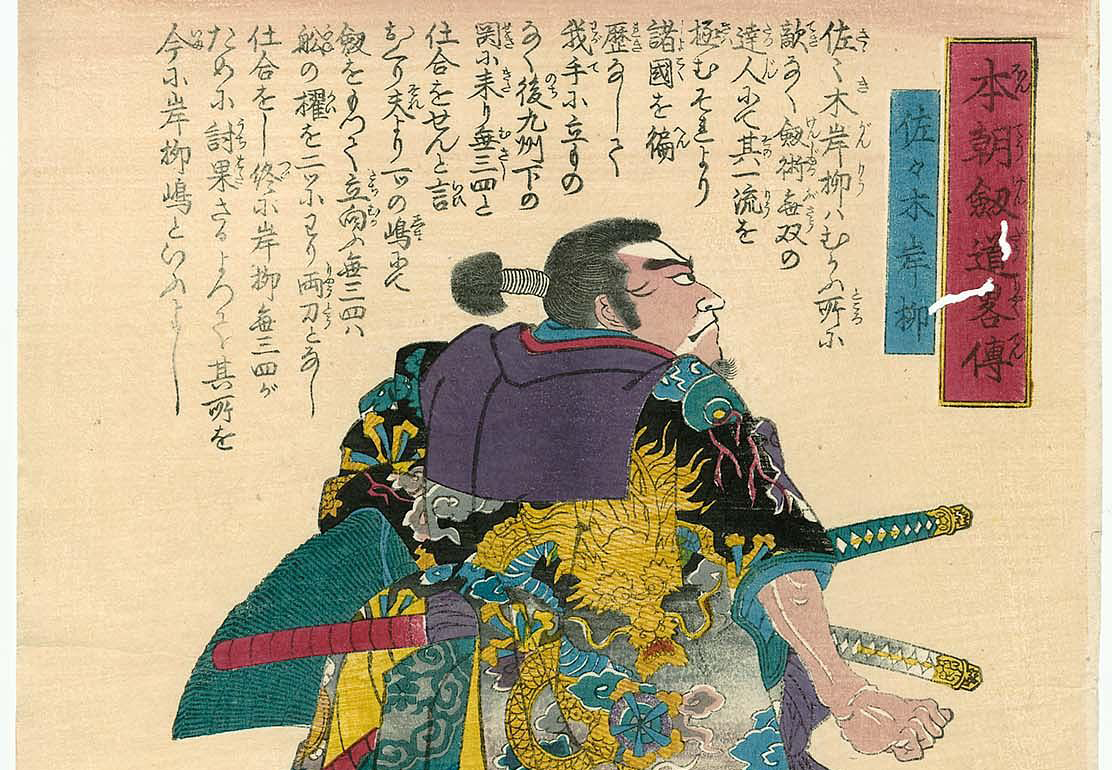
The Nitenki (二天記) describes how Sasaki Kojiro, a master swordsman, was consumed by anger. This anger, in turn led to his defeat by Miyamoto Musashi.
While the story emphasizes the idea that anger led to Kojiro’s downfall, it’s more illustrative to understand how anger affects us and changes our approach to problem-solving.
Anger’s Effects
Everyone experiences anger differently, but there are some patterns. When we are in an angry state, we often solve problems differently: we are more direct, we are more impatient, we dismiss details, we become inclined to act rather than think.
Under magnetic resonance imaging (MRI), angry patients show increased activation in the amygdala (the “alarm system” with a fight-or-flight-response) and hypothalamus (which increases heart rate and breathing to prepare for action). But angry patients also show activation of the prefrontal cortex (the place of logic, planning, and impulse control). In a way, there are simultaneous conflicting emotions emerging.
You can imagine three people in a room: The amygdala is shouting “Go Go Go!”, the hypothalamus is shouting “Yes, let’s go!“, while the prefrontal cortex says, “Wait, let’s think about this.” If the amygdala and hypothalamus win out, we often act without a plan in mind.
This often leads us to act before thinking, and making decisions that aren’t fully thought through. This can lead to maladaptive strategies and solutions.
The Effects of Kojiro’s Anger
In a fight, this translates to looking for the first opportunity to unleash a killing blow.
While Kojiro didn’t lose his technical knowledge or skill, his anger would lead him to choose a specific strategy: a single devastating blow that would eliminate the threat. It was the fastest way and most direct way of eliminating the threat.
Kojiro would not find satisfaction in a slow, methodical and technical battle: trading feints to create an opening for a precise strike. Kojiro would come into the fight looking for an opening to pounce on Musashi and deliver a furious and deadly assault.
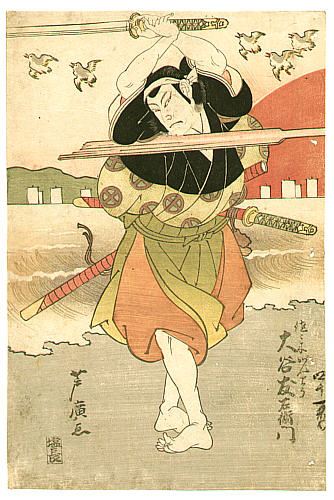
This would make him like a cornered beast: ferocious but predictable. All Musashi would need to do is show an opening for a strike, and Kojiro could be reliably expected to jump on the opportunity.
It is said that there are four attributes that determine a fight: Power, Speed, Distance, and Timing. Musashi had come into the fight with a longer weapon that would allow him to attack Kojiro while being out of attack range. This disadvantage could be accounted for and overcome if Kojiro focused on timing and fought a more strategic battle.
However, Kojiro’s anger led his timing to be incredibly predictable. Musashi was able to take full advantage.
From the Nitenki:
With this Kojiro’s anger came to a head, and when Musashi approached him, he attacked with the intention of cutting his head down the middle. Kojiro’s sword cut the knot of Musashi’s headband, and it fell to the ground. Musashi also launched his attack at the same moment, and his blow hit the head of his adversary, who fell instantly.
Influenced by his anger, Kojiro did not fully consider how Musashi’s new weapon would change his strategy. Instead, he felt the urge to act quickly, ferociously, and decisively. This turned out to be the wrong choice, and led to Musashi’s victory.
Maladaptive Anger
I should be clear in saying that Anger isn’t always a problem. Emotions, such as anger, are often seen as survival mechanisms against threats. Anger can motivate us to act first, which can be the best solution to a given problem.
For example, you may become angry when a large man, with biceps the size of your head, unjustly threatens a child. While you normally would not put yourself in front of a large man, your anger compels you to step in and come to the aid of the child.
In another example, an office worker was so frustrated of running out of breath whenever he walked the stairs that he impulsively joined a workout class. This turned out to be incredibly fulfilling and improved his health in the long-run. After all, in some cases angry states can keep you persistent.
As we will discover, emotions like anger are not simply–good or bad. They are tools and advisors that are meant to help us navigate the challenges of the world. They also provide insight into our personal fundamental needs. We can use them to understand ourselves on a deeper level.
Leave a Reply